
The Strategic Difference Between Power Vendors and Power Engineering Firms
Across Nigeria’s industrial and commercial sectors, the conversation about reliable electricity often begins with equipment.
Organizations ask questions such as:
- What generator capacity should we buy?
- Which brand of inverter is best?
- How many solar panels will power our facility?
While these questions are understandable, they reveal a deeper misconception about energy infrastructure.
Reliable power is not fundamentally an equipment problem.
It is an engineering problem.
The difference between these two perspectives often determines whether an enterprise operates with stable, cost-efficient power or remains trapped in a cycle of expensive and unreliable energy solutions.
This is why forward-looking organizations increasingly prioritize power engineering expertise over simply purchasing equipment.
The Equipment Trap
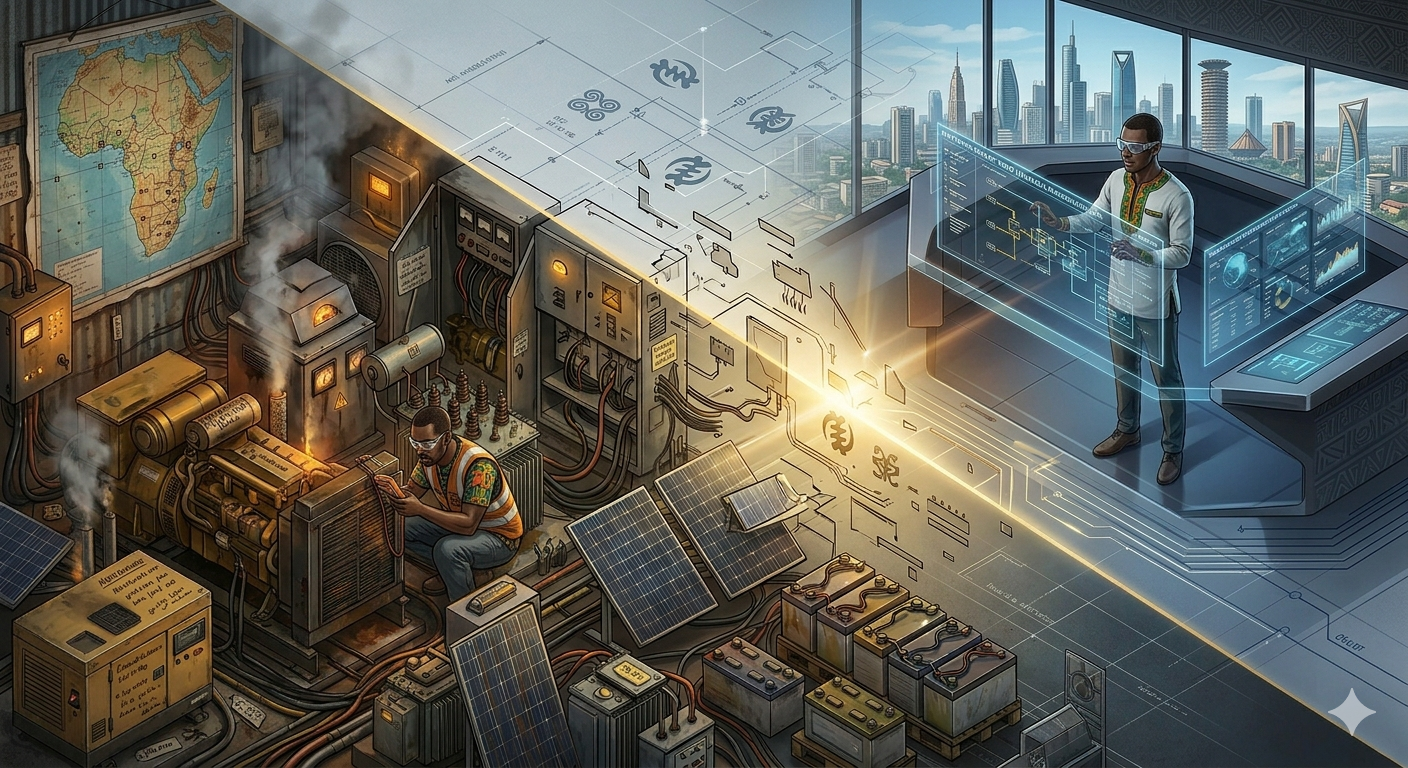
For many businesses, solving power challenges begins with purchasing equipment. A generator is installed to compensate for grid instability. Later, additional generators are added as demand grows. Eventually, solar panels or battery systems are introduced.
Over time, the facility accumulates multiple power assets operating independently:
- diesel generators
- solar installations
- battery storage systems
- grid connections
However, without proper system engineering, these components often operate inefficiently. Equipment may be oversized, underutilized, or poorly integrated into the facility’s operational profile.
The result is a fragmented energy system characterized by:
- excessive fuel consumption
- higher maintenance costs
- unstable power transitions
- inefficient capital investment
This approach treats energy infrastructure as a series of isolated purchases rather than a coordinated engineering system.
Power Infrastructure Is a System, Not a Product
Industrial power infrastructure functions as a complex system of interdependent components.
These components include:
- generation sources
- load demand patterns
- electrical distribution architecture
- control systems
- storage solutions
- operational redundancy
The effectiveness of this system depends not on individual pieces of equipment but on how they are engineered to work together.
For example, installing a high-capacity generator does not guarantee reliability if the facility’s load characteristics fluctuate significantly. Similarly, deploying solar panels without integrating intelligent control systems may produce minimal cost savings.
Engineering ensures that every component of the energy ecosystem functions as part of a coherent operational framework.
The Real Questions Energy Engineering Answers
When power systems are approached from an engineering perspective, the focus shifts from equipment procurement to strategic infrastructure design.
Instead of asking what equipment should we buy, the critical questions become:
- What is the facility’s true load profile across operating hours?
- How can generation sources be optimized to reduce fuel dependency?
- What configuration ensures maximum system reliability?
- How can energy infrastructure scale with operational growth?
- What design minimizes long-term operating expenditure?
Answering these questions requires detailed technical analysis, including:
- load modeling
- energy demand forecasting
- electrical system design
- hybrid system architecture
- lifecycle cost analysis
These are engineering challenges, not equipment selection exercises.
The Hidden Cost of Poor Engineering
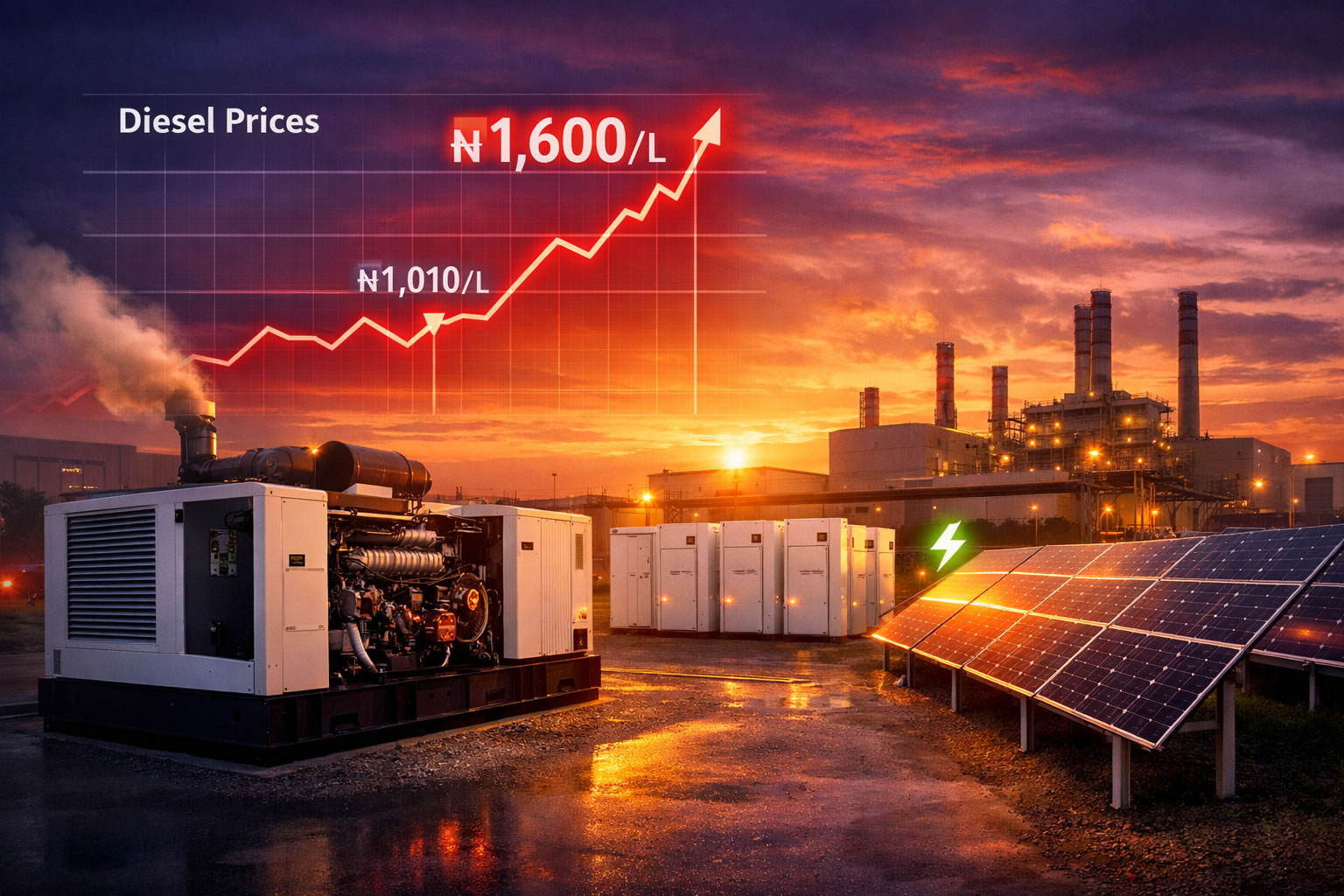
In many industrial environments, energy costs are dominated by diesel generation. With diesel prices now approaching ₦1,600 per litre, even small inefficiencies in power system design can translate into enormous financial losses.
Consider a typical facility operating a 1MW generator for 16 hours per day.
At current diesel prices, annual fuel consumption can exceed ₦2 billion. If the system is poorly engineered—resulting in oversizing, inefficient load balancing, or unnecessary runtime—the cost impact becomes significant.
A power system engineered for optimal efficiency can reduce diesel consumption by 30–50 percent through strategies such as:
- hybrid energy integration
- load management
- intelligent generator scheduling
- solar and battery optimization
The difference between these outcomes lies not in the equipment itself, but in the engineering behind the system.
Hybrid Energy Systems: Engineering at Work
Hybrid energy systems illustrate the importance of engineering in modern power infrastructure.
A hybrid system integrates multiple energy sources—such as diesel generation, solar photovoltaic arrays, and battery storage—into a coordinated architecture.
However, the effectiveness of hybrid systems depends entirely on engineering design.
Key considerations include:
- solar generation capacity relative to load demand
- battery storage sizing
- generator synchronization
- energy management software configuration
- transition stability between energy sources
Without careful engineering, hybrid installations may deliver minimal efficiency improvements. With proper design, they can significantly reduce operating costs while enhancing system reliability.
Reliability Is an Engineering Outcome
In many sectors, operational downtime can be extremely costly. Manufacturing facilities, data centers, and telecommunications infrastructure all depend on uninterrupted power supply.
Achieving reliability requires engineering solutions that incorporate:
- redundancy planning
- fault tolerance design
- intelligent switching mechanisms
- power quality management
- predictive maintenance frameworks
Simply installing more equipment does not necessarily improve reliability. In fact, poorly integrated equipment can introduce additional points of failure.
Reliability emerges from system architecture, which is fundamentally an engineering discipline.
The Financial Case for Engineering
Beyond technical performance, energy engineering also has significant financial implications.
A well-designed power infrastructure can transform an organization’s cost structure by:
- reducing fuel consumption
- extending equipment lifespan
- minimizing maintenance expenses
- optimizing capital investment
In contrast, organizations that focus solely on equipment purchases often experience escalating operating costs over time.
From a financial perspective, engineering converts energy infrastructure from a recurring cost burden into a strategic asset that supports long-term operational stability.
From Vendors to Engineers
The distinction between equipment vendors and engineering firms is therefore critical.
Equipment vendors primarily focus on supplying products. Their role typically ends once the equipment is installed.
Engineering firms, on the other hand, approach power infrastructure holistically. Their responsibility extends from initial system analysis through design, integration, and long-term optimization.
This broader perspective ensures that power systems are not merely installed, but engineered for performance, efficiency, and resilience.
Engineering the Future of Industrial Power
As Nigeria’s energy landscape continues to evolve, organizations must adapt to new challenges, including:
- rising fuel costs
- grid instability
- increasing energy demand
- environmental considerations
Addressing these challenges requires more than purchasing additional generators or installing isolated renewable assets.
It requires a strategic approach to power infrastructure rooted in engineering principles.
This is the philosophy guiding the work of Powergen Engineering Limited.
By combining technical expertise with strategic system design, Powergen helps enterprises build energy infrastructures that are:
- reliable
- cost-efficient
- scalable
- future-ready
In an era where energy costs and operational continuity are critical to business performance, engineering has become the defining factor between reactive power solutions and resilient energy systems.
Conclusion
Reliable electricity is not the result of simply purchasing better equipment.
It is the result of engineering better systems.
Organizations that recognize this distinction position themselves to achieve greater operational stability, improved financial performance, and long-term energy resilience.
In the evolving energy landscape, the companies that succeed will not be those that buy the most equipment.
They will be the ones that engineer their power infrastructure intelligently.