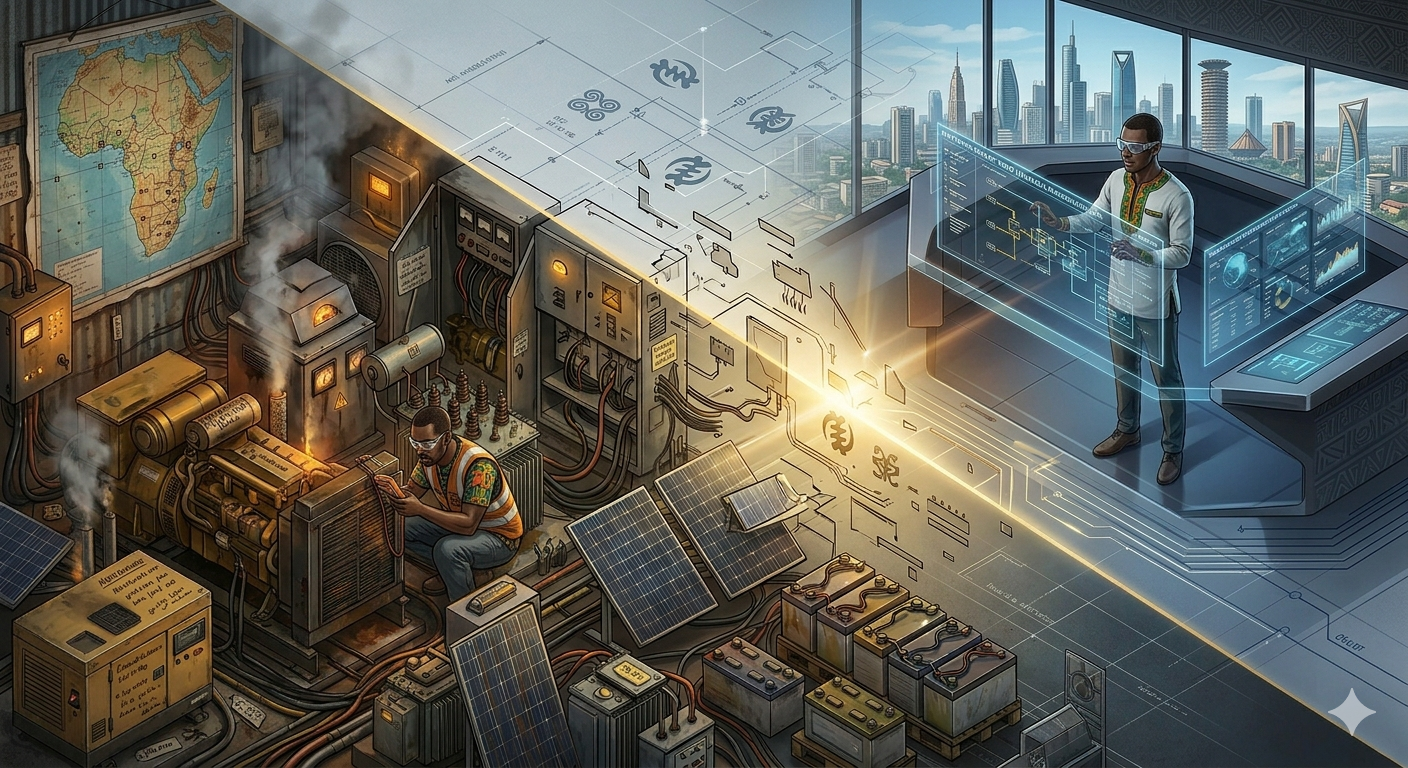

Engineering Reliable Energy Infrastructure for Manufacturing, Oil & Gas, and Large Enterprises
Nigeria’s industrial sector operates in one of the most energy-volatile environments in the world. Grid instability, tariff restructuring, diesel price fluctuations, and foreign exchange exposure have transformed power from a utility expense into a strategic risk variable.
For manufacturers, agro-processors, oil & gas operators, cement plants, telecom infrastructure providers, and large commercial estates, energy reliability is no longer optional — it is foundational to operational continuity, profitability, and investor confidence.
This comprehensive guide explains how industrial power systems are designed, engineered, financed, and deployed in Nigeria — and how enterprises can build resilient energy infrastructure that protects both productivity and long-term capital.
Engineering Reliable Energy Infrastructure for Manufacturing, Oil & Gas, and Large Enterprises Nigeria’s industrial sector operates in one of the
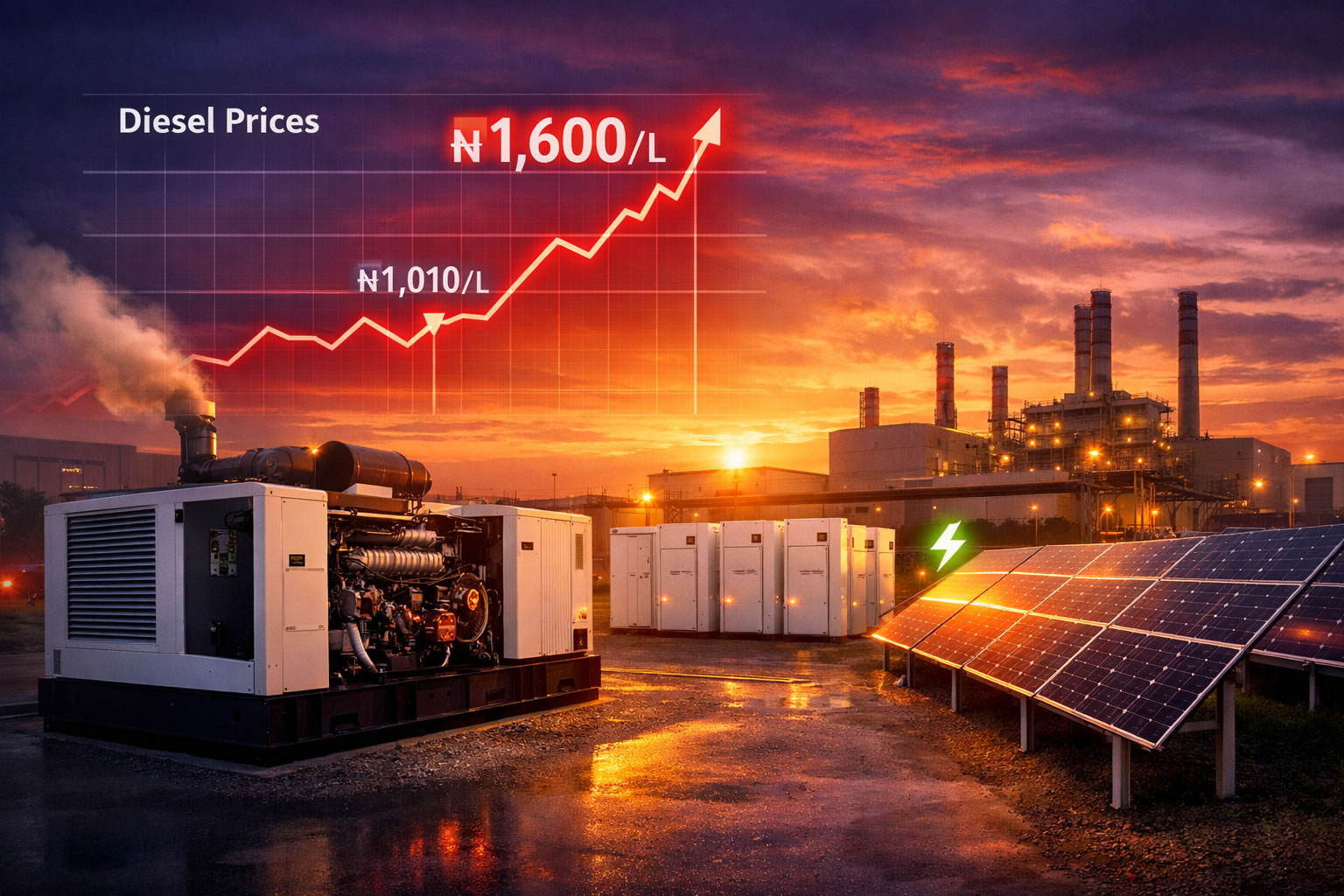
Diesel now costs ₦1,600 per litre.
See how Nigerian factories are reducing fuel exposure.
1. The Nigerian Industrial Power Reality
1.1 Grid Dependency as a Strategic Risk
Nigeria’s national grid is characterized by:
- Frequent system collapses
- Load shedding
- Voltage instability
- Limited transmission capacity
- Regional distribution inconsistencies
For industrial facilities, this translates into:
- Production downtime
- Equipment damage from voltage fluctuation
- Increased maintenance costs
- Missed export deadlines
- Revenue leakage
Industrial plants operating 24/7 cannot tolerate unscheduled outages. A single hour of downtime in a medium-sized factory can result in losses ranging from ₦5 million to ₦50 million depending on scale and product type.
Grid dependency therefore exposes enterprises to operational fragility.
1.2 Tariff Reforms & Band Classification Impact
Recent tariff segmentation into performance-based bands has introduced cost unpredictability. Facilities classified under higher supply bands face elevated tariffs, while actual delivery performance often remains inconsistent.
Industrial operators must now evaluate:
- Effective cost per kWh (including hidden reliability costs)
- True uptime percentage
- Penalties from production delays
- Escalating annual tariff adjustments
Energy strategy must move from reactive purchasing to proactive infrastructure planning.
1.3 Diesel Cost Volatility & FX Exposure
Diesel remains the dominant industrial backup power source in Nigeria. However:
- Pricing is deregulated
- Supply chain is import-dependent
- FX volatility impacts landed cost
- Logistics disruptions affect availability
Diesel price movements over the past five years have demonstrated extreme volatility. For a 1MW generator running 16 hours daily, a ₦100 per litre increase can translate into tens of millions in additional annual operating expenditure.
Industrial leaders must therefore analyze:
- Fuel cost sensitivity models
- Long-term OPEX exposure
- Alternative energy diversification
2. Categories of Industrial Power Solutions
Industrial energy infrastructure is not one-size-fits-all. It is engineered based on load profile, industry type, uptime requirements, fuel availability, land footprint, and capital structure.
2.1 Diesel Generator-Based Systems
Diesel generators remain common due to:
- High torque reliability
- Mature servicing ecosystem
- Rapid deployment capability
Key Engineering Considerations:
Prime vs Standby Rating
- Prime: Designed for continuous operation
- Standby: Emergency backup only
Synchronization & Paralleling
Industrial facilities often deploy multiple generators operating in parallel to:
- Increase redundancy
- Improve load matching
- Optimize fuel efficiency
Automatic Transfer Switch (ATS) Systems
Ensures seamless switching between grid and generator supply.
Diesel systems are appropriate when:
- Gas supply is unavailable
- Solar footprint is limited
- Short-term deployment is required
However, lifecycle fuel cost remains high.
2.2 Gas Generator Systems
Where gas infrastructure exists, gas generators offer:
- Lower fuel cost per kWh
- Reduced emissions
- Longer maintenance intervals
Types of Gas Systems:
- Natural gas pipeline-fed
- LPG-based modular systems
Engineering Benefits:
- Lower carbon output
- Reduced fuel storage risk
- Quieter operations
However, feasibility depends on:
- Pipeline access
- Gas pressure stability
- Regulatory approvals
Gas systems are particularly effective in industrial clusters near gas infrastructure corridors.
2.3 Solar PV Power Plants (1MW – 50MW Scale)
Industrial solar plants provide long-term cost stability.
Deployment Types:
Ground-Mounted Systems
- Ideal for large land availability
- Easier maintenance access
Rooftop Commercial Arrays
- Efficient use of factory roof space
- Reduced civil works
Core Components:
- Monocrystalline PV modules
- String or central inverters
- Mounting structures
- Monitoring systems
Solar reduces daytime diesel consumption significantly but requires integration with storage or generator backup for 24-hour operations.
2.4 Hybrid Power Architecture
The most advanced industrial energy strategy involves hybridization.
Hybrid Model Example:
Solar + Gas + Battery Storage
Benefits:
- Reduced fuel consumption
- Improved uptime
- Load prioritization automation
- Lower emissions
Hybrid systems integrate:
- Battery energy storage systems (BESS)
- Supervisory Control and Data Acquisition (SCADA)
- Smart energy management controllers
Hybrid systems deliver optimal cost-performance balance in volatile energy markets.
3. Engineering Design Considerations
Industrial power infrastructure must be engineered, not improvised.
3.1 Load Profiling & Energy Audits
Before design, facilities must conduct:
- 30-day load monitoring
- Maximum demand analysis
- Diversity factor evaluation
- Power factor assessment
Improper load estimation leads to:
- Oversized systems (capital waste)
- Undersized systems (frequent overload trips)
Load analysis forms the foundation of system architecture.
3.2 Redundancy Planning (N+1 Philosophy)
Industrial facilities cannot tolerate single points of failure.
Redundancy strategies include:
- N+1 generator configuration
- Dual transformer systems
- Parallel inverter design
- Redundant switchgear
N+1 ensures one unit can fail without disrupting operations.
3.3 Power Quality & Harmonics
Sensitive industrial machinery requires stable power quality.
Engineering measures include:
- Automatic Power Factor Correction (APFC) panels
- Harmonic filters
- Voltage stabilizers
- Isolation transformers
Maintaining low Total Harmonic Distortion (THD) protects equipment and reduces overheating.
3.4 Transformer & Distribution Design
Industrial systems often operate at:
- Medium voltage (11kV, 33kV)
- Step-down transformation to 415V
Key components:
- Ring Main Units (RMU)
- Switchgear panels
- Cable routing infrastructure
- Protection relays
Distribution design must prioritize safety, efficiency, and scalability.
4. EPC Execution Model for Industrial Power Projects
Engineering Procurement Construction (EPC) ensures integrated project delivery.
4.1 Engineering Phase
Includes:
- Feasibility study
- Site survey
- Financial modeling
- Risk analysis
- Regulatory compliance review
System simulation tools model performance under varying load and fuel conditions.
4.2 Procurement Phase
Critical decisions include:
- OEM selection
- Warranty evaluation
- Spare part availability
- Lead time analysis
Supplier reliability impacts long-term operational stability.
4.3 Construction & Installation
Includes:
- Civil foundations
- Structural mounting
- Electrical cabling
- Panel integration
- Safety compliance
Installation must follow international electrical codes and local regulatory requirements.
4.4 Testing & Commissioning
Final commissioning includes:
- Load bank testing
- Synchronization verification
- SCADA integration validation
- Safety inspection
Commissioning documentation ensures warranty validity and operational transparency.
5. Financial Modeling & ROI Analysis
Industrial energy planning must be financially justified.
5.1 CAPEX vs OPEX Comparison
Diesel-heavy systems:
- Lower initial capital
- High ongoing fuel expense
Solar-hybrid systems:
- Higher initial capital
- Low long-term operating cost
A 5-year Total Cost of Ownership (TCO) model often reveals hybrid systems outperform diesel-only systems.
5.2 Break-Even Analysis
Key variables:
- Fuel cost escalation rate
- Inflation rate
- Maintenance cost
- Equipment degradation rate
Solar and hybrid systems typically reach breakeven between 3–6 years depending on scale.
5.3 Risk Mitigation Value
Beyond ROI, industrial systems deliver:
- Reduced downtime risk
- Improved investor confidence
- Better ESG compliance
- Insurance premium reduction potential
Energy infrastructure should be viewed as strategic capital, not expense.
6. Industrial Case Applications
6.1 Manufacturing Plant (2MW Load)
Solution:
- 1MW Solar
- 1.5MW Gas Generator
- 500kWh Battery Storage
Outcome:
- 40% diesel reduction
- 3.8-year payback
- 99.5% uptime
6.2 Agro-Processing Facility
Solution:
- Rooftop solar + diesel hybrid
Outcome:
- Reduced daytime diesel usage
- Improved profit margin stability
6.3 Telecom Infrastructure Cluster
Solution:
- Distributed hybrid microgrids
Outcome:
- Reduced site visits
- Automated remote monitoring
7. Strategic Energy Planning Framework (2026–2036)
Forward-thinking enterprises must:
- Diversify energy sources
- Incorporate renewables
- Implement smart monitoring
- Plan for regulatory changes
- Model long-term fuel volatility
Industrial power planning must align with:
- Expansion forecasts
- ESG commitments
- Export compliance requirements
Energy strategy is now boardroom-level decision-making.
8. Why Engineering Matters More Than Equipment
Many vendors sell generators.
Few engineer integrated infrastructure.
Industrial power success depends on:
- Correct load modeling
- Appropriate redundancy design
- Proper protection systems
- Lifecycle cost planning
- Professional commissioning
The difference between equipment supply and engineering integration determines reliability.
9. How to Begin Your Industrial Power Upgrade
Step 1: Conduct a professional energy audit
Step 2: Define uptime target (99%, 99.5%, 99.9%)
Step 3: Model 5-year financial projections
Step 4: Evaluate hybridization potential
Step 5: Select an EPC partner with industrial experience
Conclusion: Power as Strategic Infrastructure
Nigeria’s industrial future depends on energy resilience. Enterprises that treat power as a strategic investment rather than a reactive expense will:
- Reduce volatility exposure
- Protect operational continuity
- Improve long-term profitability
- Strengthen competitive advantage
Industrial power engineering is no longer about backup — it is about infrastructure architecture.
For enterprises seeking engineered, scalable, and future-proof power systems, working with a dedicated industrial EPC partner ensures reliability, compliance, and financial optimization.
Request a comprehensive Industrial Energy Assessment to:
- Identify inefficiencies
- Model hybrid opportunities
- Estimate 5-year savings
- Design a resilient energy architecture
Secure your operations against uncertainty.
Engineer reliability at scale.